About Us
Understanding the CEAM community and our mission in Malaysia
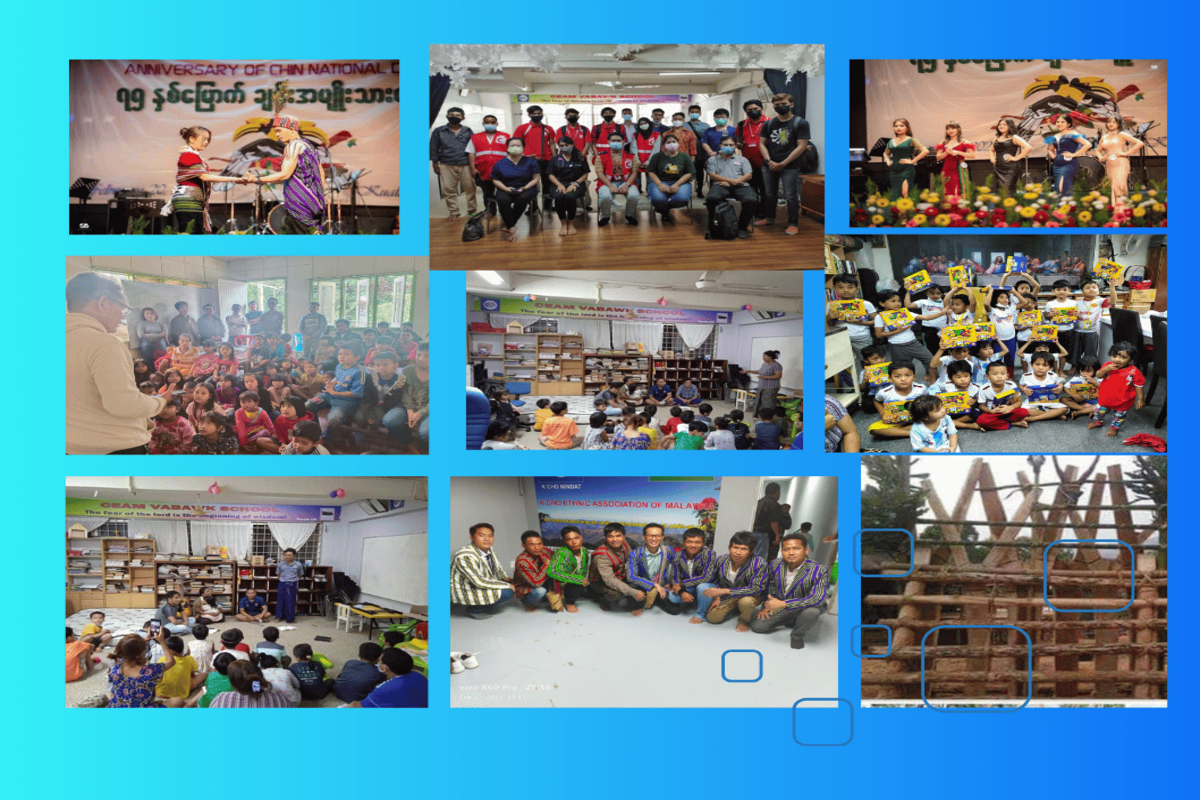
K'Cho Ethnic Association Malaysia (CEAM) is a Community-Based Organization supporting K'Cho refugees and asylum-seekers in Malaysia.
Our community consists of individuals who have fled conflict and persecution in Myanmar, seeking safety and a chance for a better life.
Who Are the K'Cho People?
The K'Cho people originate from the mountainous regions of southern Chin State, Myanmar—particularly from Mindat, Kanpetlet, Matupi, Paletwa, and surrounding areas. The K'Cho are a distinct ethnic community known for rich cultural traditions, a close-knit social structure, and deep respect for faith and heritage. A unique and enduring aspect of K'Cho heritage is the historic tradition of facial tattooing among women. Although this practice is rare today, it continues to be recognized as a profound symbol of identity and history. For generations, the K'Cho people lived in the highlands of Chin State, maintaining culturally rooted governance systems and community life before conflict necessitated displacement. Due to conflict, persecution, and systemic hardship in Myanmar, many K'Cho families have sought refuge in Malaysia in search of safety and stability.
The Mindat K'Cho represent the primary origin group within our community, while we also encompass K'Cho groups from Kanpetlet, Matupi, Paletwa, and the Yaw regions. Christianity is practiced by the majority of the community, with church groups serving as vital cultural and spiritual support networks. Community life is sustained by deep traditions of mutual aid — families sharing resources, kinship networks stepping in during hardship, and church congregations supporting those in need. CEAM works with partner agencies to widen access to skills training and lawful livelihood pathways.
Challenges & Advocacy
As a smaller and less widely recognised group, the K'Cho community can find its specific needs — particularly around language, interpretation, and access to information — overlooked in wider refugee support structures. CEAM works constructively with UNHCR, partner agencies, and fellow community organisations to help close these gaps.
Through language programs, cultural gatherings, and intergenerational storytelling, our community actively preserves K'Cho identity while navigating life in Malaysia.
Our Language
The K'Cho language family belongs to the Southern Chin branch of the Tibeto-Burman group. It exhibits substantial linguistic similarity (approximately 80–90%+) across its dialects, fostering a high degree of mutual intelligibility. The Mün dialect is prominent and widely spoken in Mindat, while Daa Yindu is a major group in Kanpetlet, alongside Ng'Gah. The Dai (Daai) dialect is dispersed across communities within the four southern townships of Chin State.
Recognition and support for K'Cho language in translation and interpretation remain essential..
Our Mission
Empowerment & Protection
To champion the rights and dignity of every K'Cho refugee, ensuring their physical well-being through robust community support networks, strategic advocacy, and access to essential humanitarian resources.
Cultural Preservation
To act as the custodian of K'Cho heritage, safeguarding our unique identity through the revitalization of our language, the celebration of our living traditions, and the transmission of ancestral wisdom to future generations.
Community Integration
To build bridges of understanding and mutual respect with Malaysian society, fostering a spirit of constructive engagement and active participation that honors both our host community and our own values.
Our Ethical Commitments
References & Academic Sources
- Mang, Kee Shein (2006). A syntactic and pragmatic description of verb stem alternation in K'chò, a Chin language. Master's thesis, Payap University.
- So-Hartmann, Helga (2009). A Descriptive Grammar of Daai Chin. STEDT Monograph Series, University of California, Berkeley.
- Bedell, George & Mang, Kee Shein (2010). The Applicative Suffix -na in K'cho. Paper presented at the 43rd International Conference on Sino-Tibetan Languages and Linguistics.
- Parkitny, Jens Uwe (2017). Marked for Life: Myanmar's Chin Women and Their Facial Tattoos. Kerber Verlag.